Industrial water purification is an important consideration for businesses comparing suitable equipment and planning a reliable operation in Kenya. Reliable water is essential for manufacturing, hospitality, food processing, institutions and commercial water businesses. Yet water from boreholes, municipal supplies, rivers and other sources can contain different contaminants that require different treatment methods.
Choosing the right water purification system in Kenya starts with understanding the source water, intended use and required production capacity. The right system should be designed around the application rather than selected solely on price.
What Is an Industrial Water Purification System?
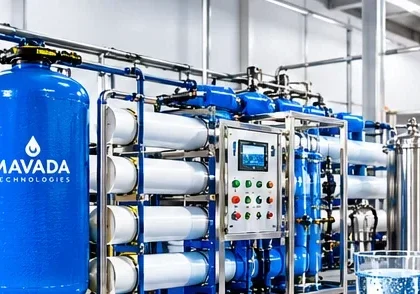
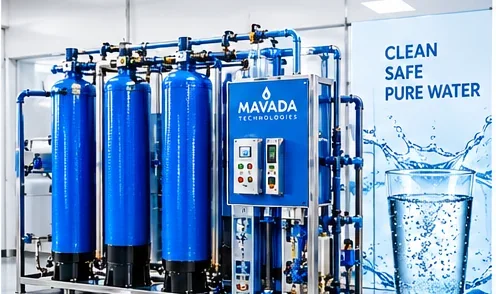
An industrial water purification system combines treatment technologies to reduce or remove unwanted substances. Depending on the source and required outcome, a plant may include sediment filtration, activated carbon filtration, water softening, reverse osmosis, ultraviolet disinfection or other specialised processes. Not every plant requires every technology.
Types of Water Purification Systems
1. Sediment filtration
Sediment filters remove suspended particles such as sand, rust and debris. They can protect downstream equipment, but do not remove dissolved salts or guarantee microbiological safety.
2. Activated carbon filtration
Activated carbon can reduce chlorine, certain organic compounds and unpleasant tastes or odours, depending on the carbon type and operating conditions.
3. Reverse-osmosis plants
Reverse osmosis uses a semipermeable membrane to remove a high proportion of dissolved salts and other substances. The right system depends on feedwater chemistry, required output, membrane selection and pretreatment.
4. Water softening
Water softeners reduce hardness caused mainly by calcium and magnesium. They can help control scale, but do not perform the same function as a complete desalination or drinking-water purification plant.
5. Ultraviolet disinfection
UV equipment uses ultraviolet light to inactivate susceptible microorganisms when correctly designed and operated. UV does not remove dissolved salts and generally does not leave a disinfectant residual.
6. Chlorination and other disinfection
Chlorination can help control microorganisms and provide a residual disinfectant where appropriate. Dosing must be controlled according to the application, water quality and applicable standards.
How to Choose the Right Water Treatment Plant in Kenya
- Source water: Borehole, municipal, surface water and seawater have different treatment requirements.
- Water analysis: Laboratory testing helps identify dissolved salts, hardness, turbidity, pH, iron, manganese, fluoride and microbiological concerns where relevant.
- Daily production: Determine how many litres or cubic metres your business requires each day.
- Peak demand: Size the plant for actual usage patterns, not only average consumption.
- Final water quality: Drinking water, boiler feedwater, food processing and cleaning may need different specifications.
- Energy and utilities: Assess electricity, water pressure, drainage and storage.
- Operating costs: Include filter replacements, chemicals, membrane cleaning, electricity and service.
- After-sales support: Ask about installation, commissioning, spare parts and training.
Water Purification Plant Costs in Kenya
Prices vary because treatment requirements differ. A basic filtration unit is not comparable to a fully equipped industrial reverse-osmosis plant. Capacity, pretreatment, automation, materials, pumps, storage and installation all affect the investment.
When requesting a quotation, provide water test results, required capacity, final water-quality targets, operating hours and installation location. Ask for a breakdown of equipment, installation scope, consumables, warranty and estimated operating requirements.
Water Purification for Coastal Kenya
Businesses in Mombasa, Kilifi, Kwale and other coastal areas should not assume every source needs the same treatment. Some boreholes produce brackish water, while seawater requires a dedicated desalination design. Other sources may need conventional filtration and disinfection. A water analysis is essential before choosing between filtration, brackish-water RO and seawater RO.
Applications of Industrial Water Purification
- Hotels, resorts and restaurants.
- Bottled-water and water-refilling businesses.
- Food and beverage production.
- Manufacturing and industrial processing.
- Schools and institutional facilities.
- Commercial property developments.
- Healthcare facilities.
- Selected agricultural and livestock applications.
Common Mistakes to Avoid
Do not buy equipment based only on advertised litres-per-hour capacity. Other common problems include ignoring laboratory testing, undersizing pretreatment, overlooking wastewater management, failing to plan for replacement filters and membranes, and assuming clear water is necessarily safe to drink.
Frequently Asked Questions
Which water purification system is best for borehole water?
It depends on the water analysis. Some boreholes need sediment filtration and disinfection, while others require iron removal, softening, reverse osmosis or a combination.
Is reverse osmosis suitable for a water-refilling business?
It can be suitable when source water and product-quality requirements justify RO treatment. The complete process should include appropriate pretreatment, disinfection, hygienic storage and quality verification.
Can one system treat both seawater and borehole water?
A system designed for one source should not automatically be assumed suitable for another. Seawater has a much higher salt concentration than most borehole water and normally requires a dedicated SWRO configuration.
Request a Water Purification Plant Quotation
Contact Mavada Technologies to discuss suitable treatment technologies for your business. Share your source-water type, intended application, target capacity and available water-quality analysis to start the selection process.
Call or WhatsApp: 0758281922
Website: mavadatechnologies.co.ke/
Related Water Treatment Guides
Explore specialist water treatment options and related system guides: