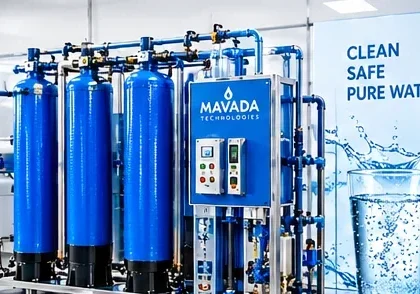
Kenya’s coastline offers potential for seawater desalination as businesses, coastal developments, hotels, industries and communities explore reliable alternative water sources. A properly designed seawater desalination plant in Kenya can transform salty seawater into freshwater suitable for domestic or industrial applications, depending on the treatment design and final water-quality requirements.
Unlike conventional water purification systems that primarily remove suspended particles, odours and selected contaminants, seawater desalination must also remove high concentrations of dissolved salts. This requires specialised treatment technology, carefully selected equipment and a system designed around the source water and intended use.
What Is a Seawater Desalination Plant?
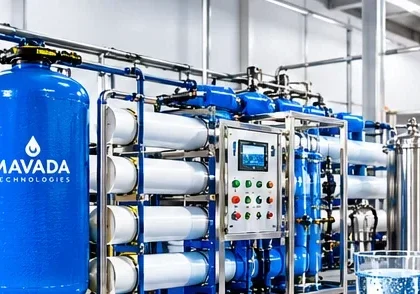
A seawater desalination plant is an engineered water-treatment system that removes dissolved salts and other impurities from seawater to produce freshwater. A widely used modern approach is seawater reverse osmosis, commonly abbreviated as SWRO. It uses specialised membranes and high-pressure pumping equipment to separate freshwater from concentrated brine.
A complete plant may include:
- Seawater intake and screening equipment.
- Pretreatment filters to reduce suspended solids and protect membranes.
- Cartridge filtration and appropriate chemical dosing.
- High-pressure pumps and reverse-osmosis membrane vessels.
- Energy-recovery equipment on suitably sized systems.
- Post-treatment, remineralisation and disinfection where required.
- Treated-water storage, monitoring instruments and controls.
- Brine management and environmentally compliant discharge arrangements.
The exact configuration depends on seawater quality, daily demand, required product-water quality and the operating environment.
How Does Seawater Reverse Osmosis Work?
1. Seawater intake
Water is collected from an appropriate marine intake point. The intake must manage debris, marine organisms, sediment and variations in water quality.
2. Pretreatment and filtration
Seawater passes through screening and filtration stages to reduce particles and membrane fouling. Depending on the source, pretreatment may include multimedia filtration, ultrafiltration, cartridge filters or controlled chemical treatment.
3. High-pressure pumping
A specialised pump raises the water pressure sufficiently to overcome osmotic pressure and drive water through the seawater reverse-osmosis membranes.
4. Membrane desalination
The membranes separate the feed into permeate, the treated freshwater stream, and concentrate or brine, which contains most of the rejected salts. Recovery must be engineered carefully to reduce scaling and fouling risks.
5. Post-treatment and storage
Freshly desalinated water may require remineralisation, pH adjustment, disinfection and final quality verification before distribution. Water intended for drinking must meet applicable drinking-water standards.
Who May Need a Seawater Desalination Plant in Kenya?
- Hotels and resorts: Coastal hospitality businesses evaluating an alternative or supplementary water source.
- Industrial facilities: Factories and processing plants with suitable coastal access.
- Property developers: Large coastal developments planning their water-supply strategy.
- Marine and port facilities: Selected operations requiring specialised freshwater production.
- Water utilities and large projects: Projects where conventional sources may be insufficient.
- Remote coastal facilities: Locations with limited freshwater infrastructure.
Suitability depends on water demand, energy availability, site conditions, capital investment, environmental approvals and the cost of alternative supplies.
How Much Does a Seawater Desalination Plant Cost in Kenya?
There is no single price for every desalination plant. Investment depends on production capacity, feedwater conditions, pretreatment, automation, civil works, installation and commissioning. A small packaged unit differs substantially from a large plant serving a development or industrial operation.
Before requesting a quotation, establish:
- Required freshwater production in litres per hour or cubic metres per day.
- Whether the source is open seawater or another saline source.
- Required freshwater quality and intended use.
- Available electricity and backup-power arrangements.
- Raw-water intake, storage and distribution requirements.
- Installation location, site access and brine-management requirements.
Request a project-specific quotation rather than relying on an equipment price that excludes essential installation and supporting infrastructure.
Why Choose a Properly Designed Desalination System?
An appropriately designed plant can provide a more dependable freshwater source and reduce dependence on some external supplies. However, desalination is energy-intensive and produces concentrated brine that must be managed responsibly. Pretreatment, membrane replacement, cleaning, energy consumption and skilled maintenance contribute to lifetime operating costs.
The best solution is not necessarily the cheapest machine. It is the system that meets water-quality requirements at a sustainable total cost.
Frequently Asked Questions
Can seawater be purified into drinking water?
Yes. Seawater reverse osmosis can produce freshwater suitable for drinking after appropriate post-treatment, disinfection and verification against applicable drinking-water standards.
Is a seawater RO plant the same as a borehole RO plant?
No. Seawater contains much higher concentrations of dissolved salts than most borehole water. The required membranes, operating pressures and equipment configuration can differ significantly.
Can a desalination plant supply a hotel or factory?
Yes, provided the system is designed for the required daily demand, peak consumption, storage capacity and final water-quality specifications.
What information is needed for a quotation?
Provide the proposed location, water source, required production capacity, intended use and available power supply.
Request a Seawater Desalination Solution
Planning a coastal water-supply project? Contact Mavada Technologies to discuss your water-treatment requirements and explore suitable industrial reverse-osmosis and desalination options. Request a technical assessment and quotation based on your production needs, site conditions and water-quality targets.
Call or WhatsApp: 0758281922
Website: mavadatechnologies.co.ke/