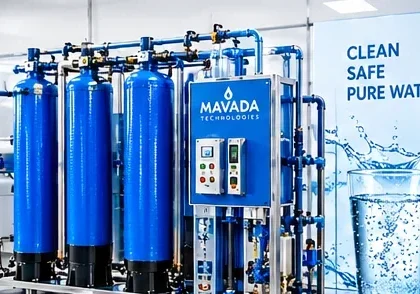
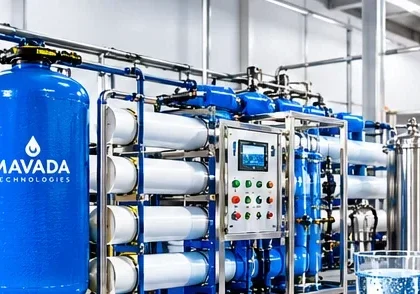
Are you looking for a seawater reverse osmosis system for an industrial facility, coastal hotel, property development or water-supply project in Kenya? Choosing the right equipment is essential for producing reliable freshwater without creating unnecessary energy, maintenance or replacement costs.
Seawater reverse osmosis (SWRO) is a membrane-based desalination technology that removes dissolved salts from seawater. The key is to evaluate the entire treatment process rather than purchasing a reverse-osmosis machine in isolation.
What Is a Seawater Reverse Osmosis System?
An SWRO system uses pressure and semipermeable membranes to separate water from dissolved salts. Pretreatment reduces particles and substances that could foul the membranes. A high-pressure pump then pushes pretreated water through the membrane assembly.
The system produces permeate, the freshwater stream, and concentrate, a stream containing a higher concentration of rejected salts. The freshwater may need additional treatment, while concentrate requires appropriate management and disposal.
Essential Components of an SWRO Plant
1. Seawater intake system
The intake supplies feedwater. Its design should account for seawater conditions, sediment, marine organisms, seasonal variations and biological growth.
2. Pretreatment filters
Pretreatment protects membranes against suspended solids and fouling. Depending on the source, the system may use screening, multimedia filtration, ultrafiltration, cartridge filtration and appropriate chemical dosing.
3. High-pressure pump
The pump supplies the pressure required for seawater desalination. Efficiency, operating conditions, material compatibility and maintenance requirements affect operating expenses.
4. Reverse-osmosis membranes
Membranes perform the main salt-separation function. Performance depends on feedwater quality, pressure, temperature, recovery rate and maintenance.
5. Energy-recovery equipment
Suitable energy-recovery devices can reduce energy consumption in appropriately sized plants by recovering energy from the pressurised concentrate stream.
6. Post-treatment equipment
Desalinated water may require remineralisation, pH adjustment, corrosion-control measures and disinfection, depending on its final application.
7. Monitoring and controls
Pressure gauges, flow meters, conductivity instruments, alarms and automated controls help operators monitor water quality and identify abnormal conditions.
How Much Does a Seawater RO System Cost?
Cost depends on production capacity, feedwater salinity and temperature, pretreatment, membrane quantity, pumping and energy-recovery equipment, automation, storage, intake construction, brine management, installation and commissioning.
A quotation should distinguish equipment supply from the complete installed project. A low equipment-only price may not include intake works, electrical infrastructure, storage, installation or service.
For a meaningful comparison, request quotations using the same production target, water-quality specification, operating assumptions and scope of supply.
How to Calculate the Required Desalination Capacity
Begin with expected daily water demand. For example, a facility requiring 20,000 litres per day needs 20 cubic metres of freshwater daily. If the plant operates for 10 hours per day, the theoretical average production rate is 2,000 litres per hour.
This is an initial sizing calculation only. Final design must account for peak demand, plant availability, cleaning downtime, storage, recovery rate and water used by plant operations. A qualified designer should establish the actual equipment capacity.
Seawater RO vs Brackish-Water RO
The main difference is feedwater salinity. Seawater systems are designed for high-salinity water and generally require higher operating pressures. Brackish-water systems are designed for lower-salinity sources, such as some boreholes. Test the source water before selecting a technology.
How to Reduce SWRO Operating Costs
- Select appropriate intake and pretreatment equipment.
- Avoid unnecessary pressure losses through correct sizing.
- Monitor membrane performance and normal operating conditions.
- Clean membranes according to manufacturer criteria.
- Replace consumables according to condition and service requirements.
- Maintain pumps, valves, instruments and controls.
- Evaluate energy recovery where appropriate.
- Manage concentrate responsibly and comply with applicable requirements.
Do not increase recovery or alter chemical dosing without technical assessment; poorly controlled changes can cause scaling, fouling and premature membrane failure.
Frequently Asked Questions
Can a seawater RO system remove all impurities?
No system should be assumed to remove every possible contaminant. Performance depends on the membrane, design, operating conditions and feedwater. Final water quality should be tested.
Does an SWRO plant need maintenance?
Yes. Filters, pumps, membranes, instruments and other components require inspection and maintenance. The schedule depends on water quality, operating hours and manufacturer guidance.
Is reverse osmosis enough to make seawater drinking water?
Reverse osmosis is a major part of desalination, but a complete drinking-water system may also require remineralisation, disinfection, hygienic storage and verification against relevant standards.
Get a Seawater RO System Quotation
Contact Mavada Technologies to discuss suitable reverse-osmosis options for commercial and industrial applications. Share your site location, source-water information, target production and intended use to help identify an appropriate configuration.
Call or WhatsApp: 0758281922
Website: mavadatechnologies.co.ke/